
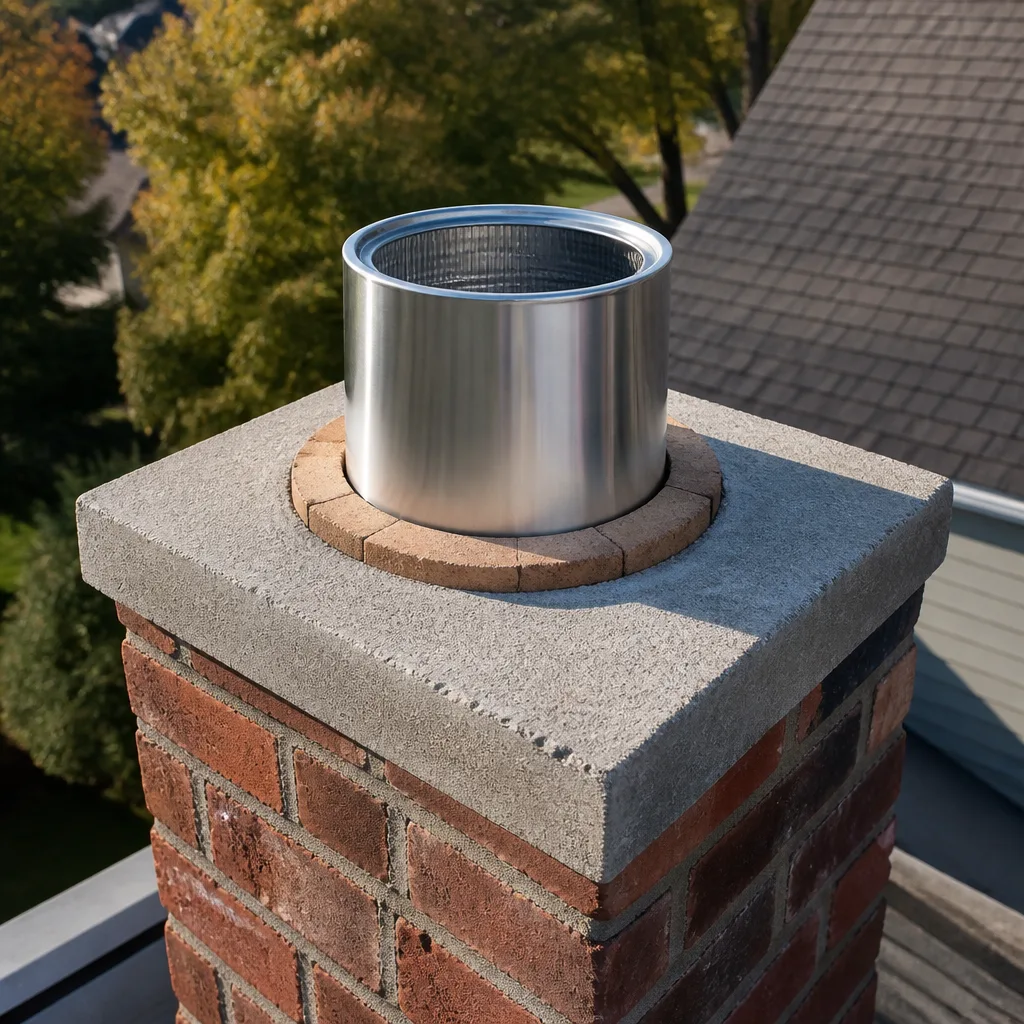
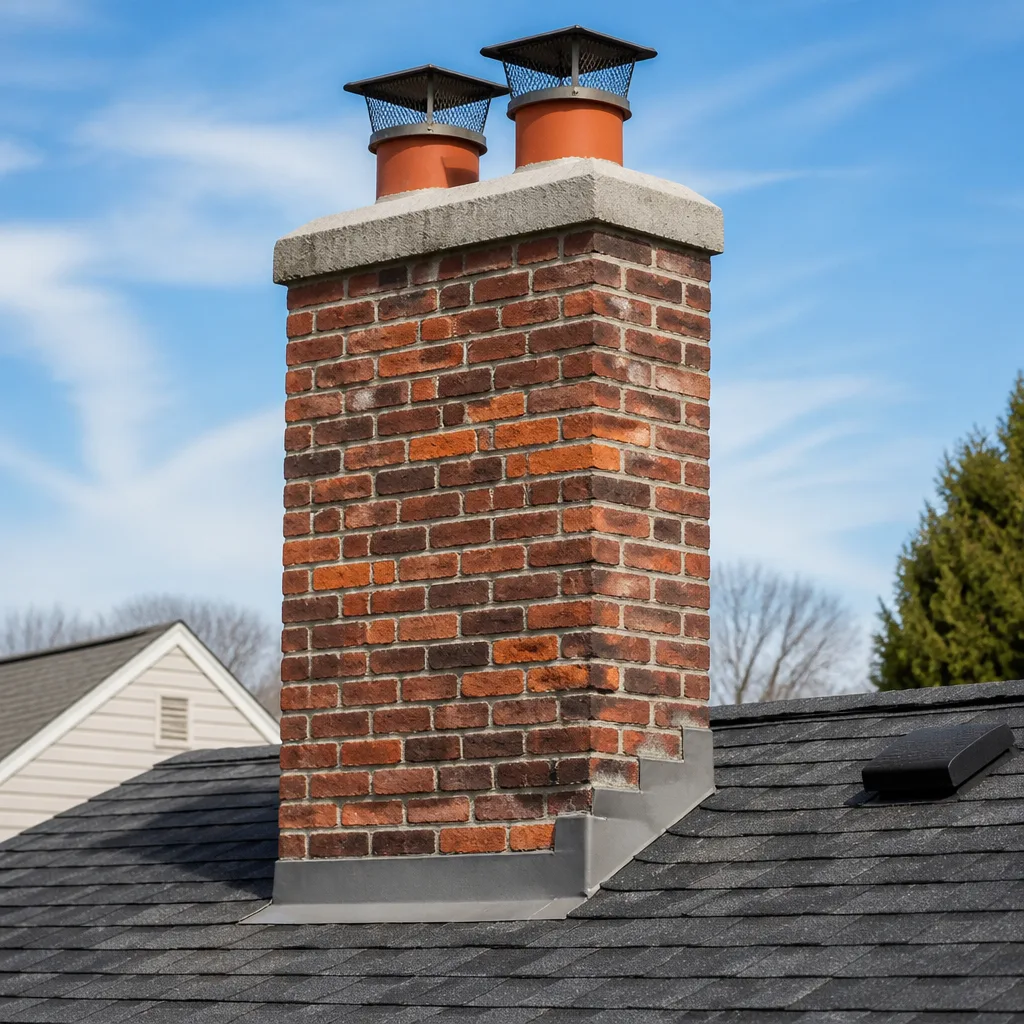
Level 1 sweep and inspection to the NFPA 211 annual standard - flue, crown, cap, and flashing checked and photographed
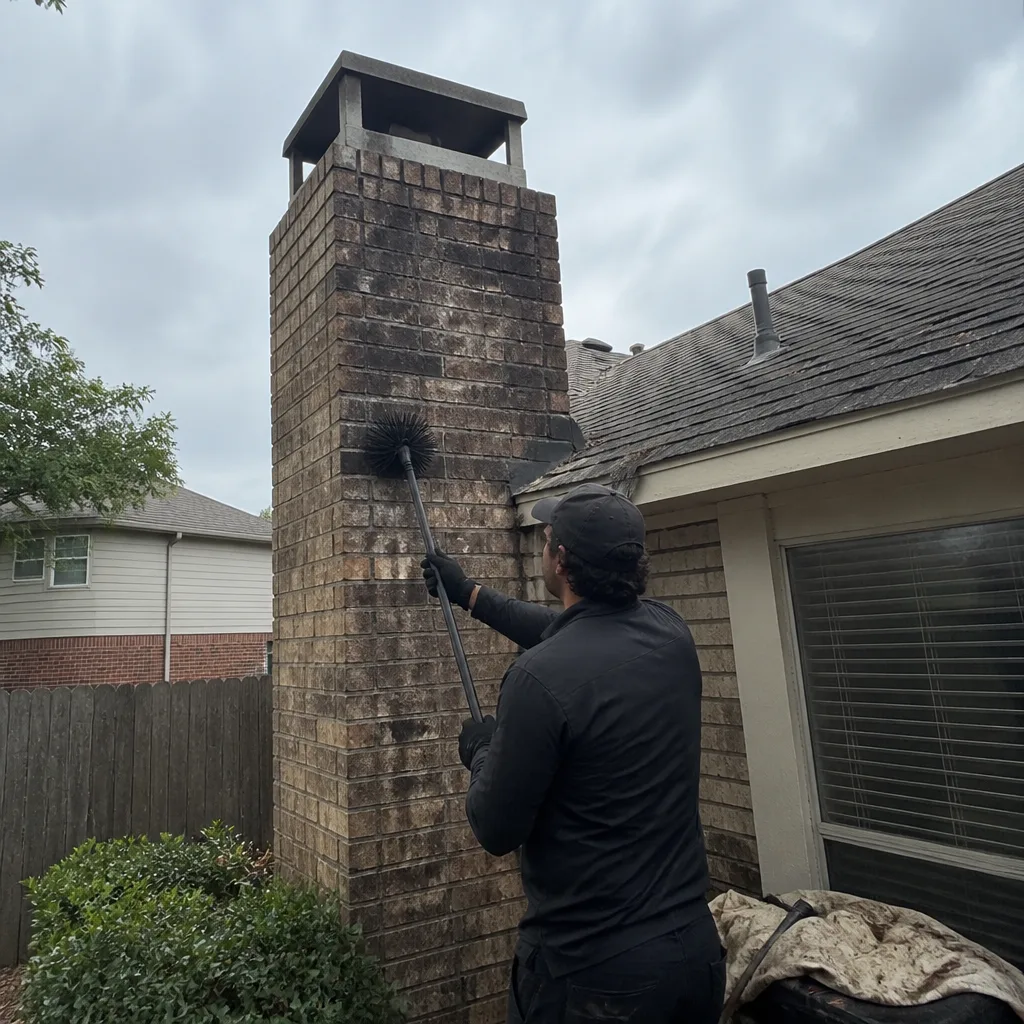
Chimney sweep logs do not sweep chimneys. They loosen some creosote - which then falls where a brush and vacuum still have to collect it.


 Before
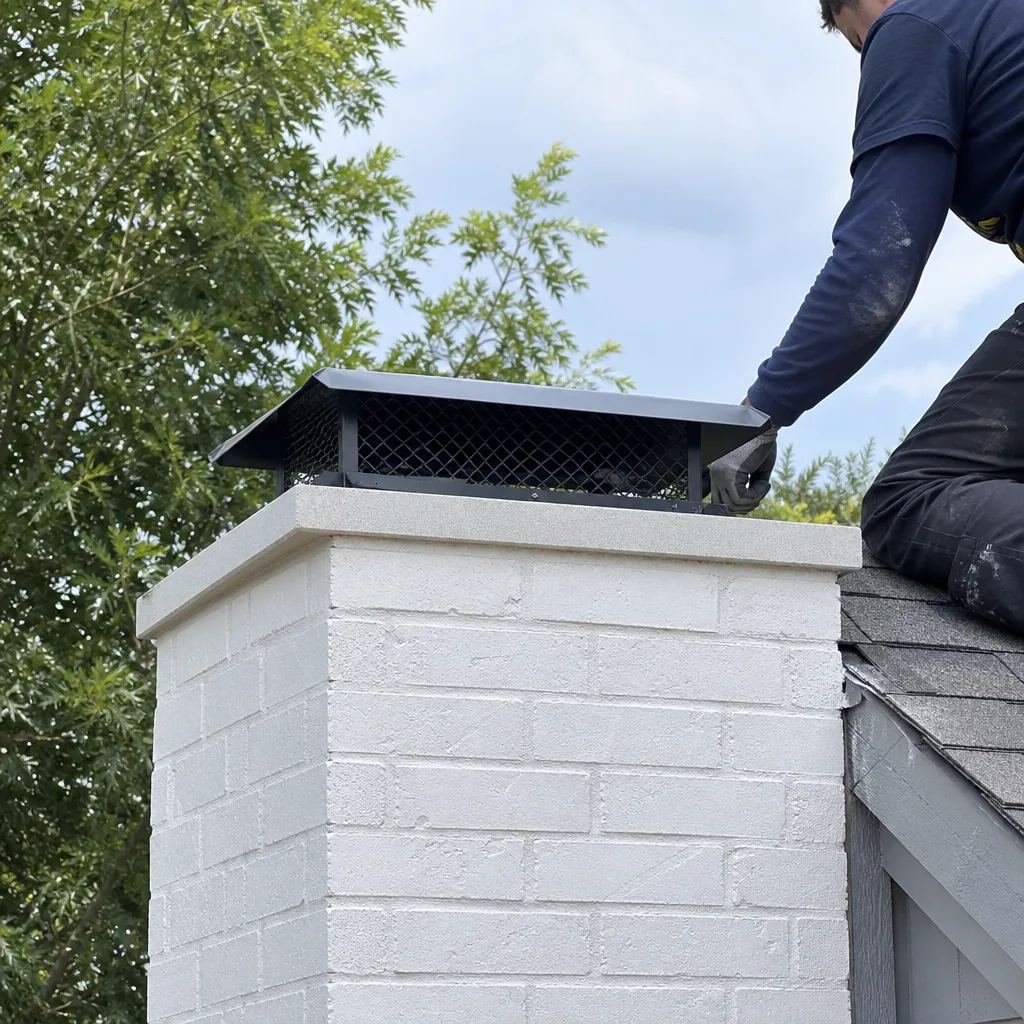 After
After Before
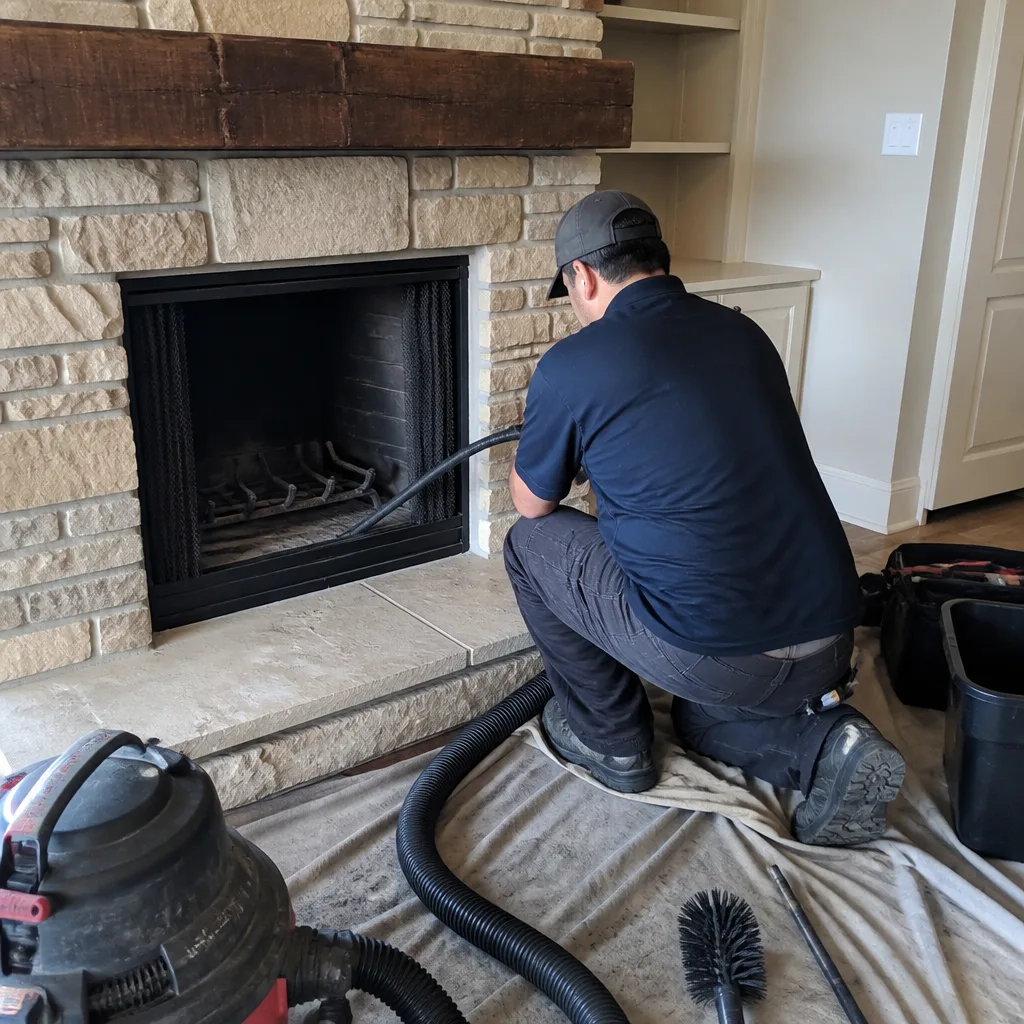 After
After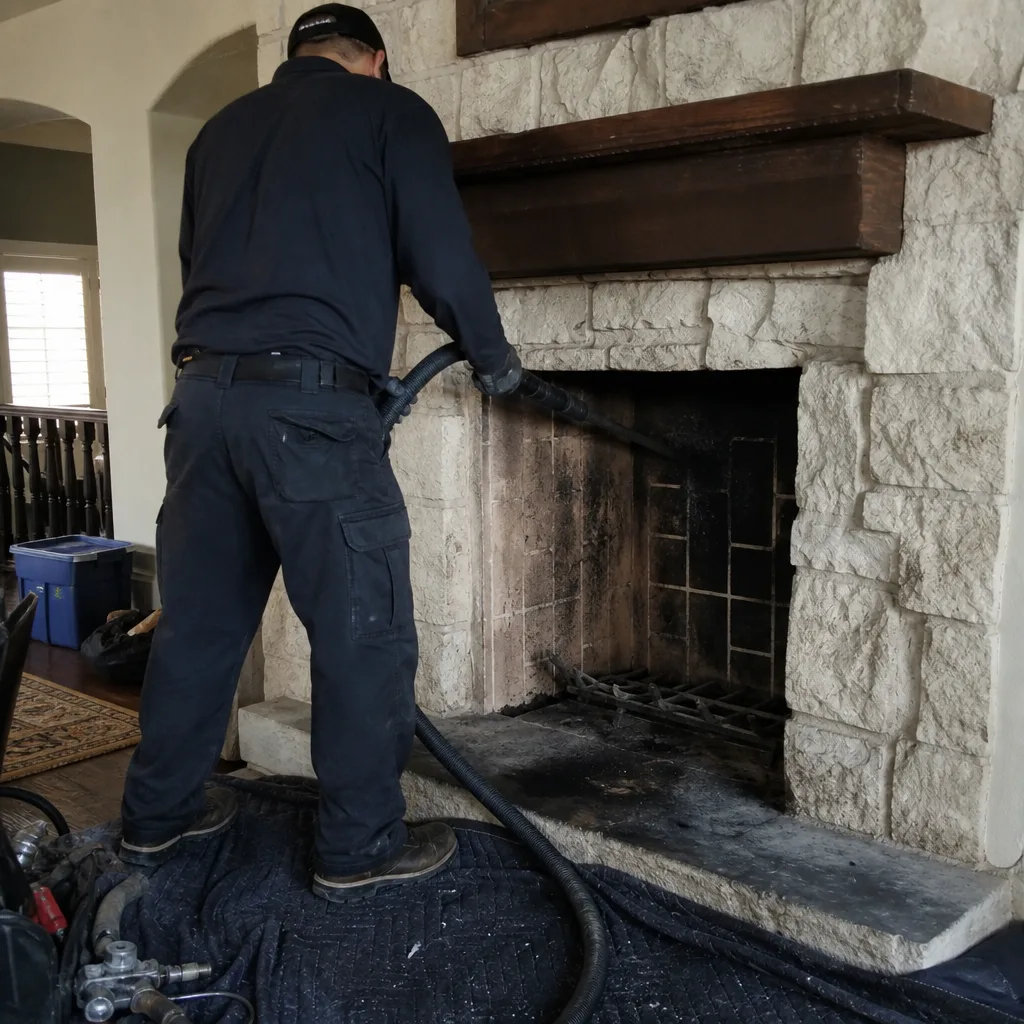 Before
 After
AfterFireplace Cleaning in Plano, TX
Fireplace cleaning in Plano, TX typically runs between $149 and $329, depending on the amount of creosote buildup, the firebox condition, and whether the job uncovers repairs that need quoting separately. Most appointments are completed in one visit, and every one of them starts with a written price – not a verbal estimate that changes once the technician is inside your home.
If you’ve used your fireplace at least a handful of times this season, or if it’s been more than a year since anyone cleaned it, it’s time for a professional cleaning. Soot and creosote accumulate faster than most homeowners expect, and in Plano’s climate – where winter cold snaps push people to fire up hearths they haven’t touched since the previous February – neglected fireboxes and flue liners are one of the more common calls we take. Our Chimney Cleaning & Sweep in Plano service covers the full system, from the firebox floor to the crown at the top, but this page focuses specifically on what a dedicated fireplace cleaning includes, what it costs, and what you’ll have in hand when we’re done.
To schedule or get a straight answer on price, call us at (469) 240-3101. A live person picks up, any hour.
When You Need Fireplace Cleaning
Some of these signs are obvious. Others are easy to dismiss until they’re not.
- You smell smoke in the room when the damper is open. Smoke that drifts into the living space instead of drawing up the flue usually means the firebox or smoke chamber is coated with enough buildup to restrict airflow. In Plano homes with tighter, modern construction – particularly in West Plano developments built after 2010 – negative air pressure makes this problem worse.
- You can see black buildup on the firebox walls or damper frame. A thin layer of gray ash is normal. Black, tar-like deposits or a shiny coating on the firebox walls is Class II or Class III creosote, which is a fire hazard and needs to come out before the next fire is lit.
- It’s been more than 12 months since the last cleaning. The National Fire Protection Association’s NFPA 211 standard recommends annual inspection and cleaning for any fireplace that sees regular use. One cord of seasoned wood is enough to justify a cleaning appointment.
- You’ve moved into a home and don’t have records from the previous owner. This is one of the most common scenarios we see in Plano’s Legacy West corridor and in older neighborhoods near Spring Creek. If there’s no documented cleaning on file, assume it needs one.
- You notice white staining (efflorescence) on the firebox brick or mortar. White mineral deposits on the interior brick face mean moisture is getting in somewhere – often through a deteriorating crown or a chimney cap that’s failing. A cleaning visit is also the right time to document those conditions before they worsen.
- Your last fire burned poorly, smelled off, or produced more smoke than usual. Restricted draft, debris in the smoke shelf, or a partially blocked flue will all show up as a sluggish or smoky fire. A fireplace cleaning clears the cause and tells you whether the fix is that simple or something more.
Our Fireplace Cleaning Process
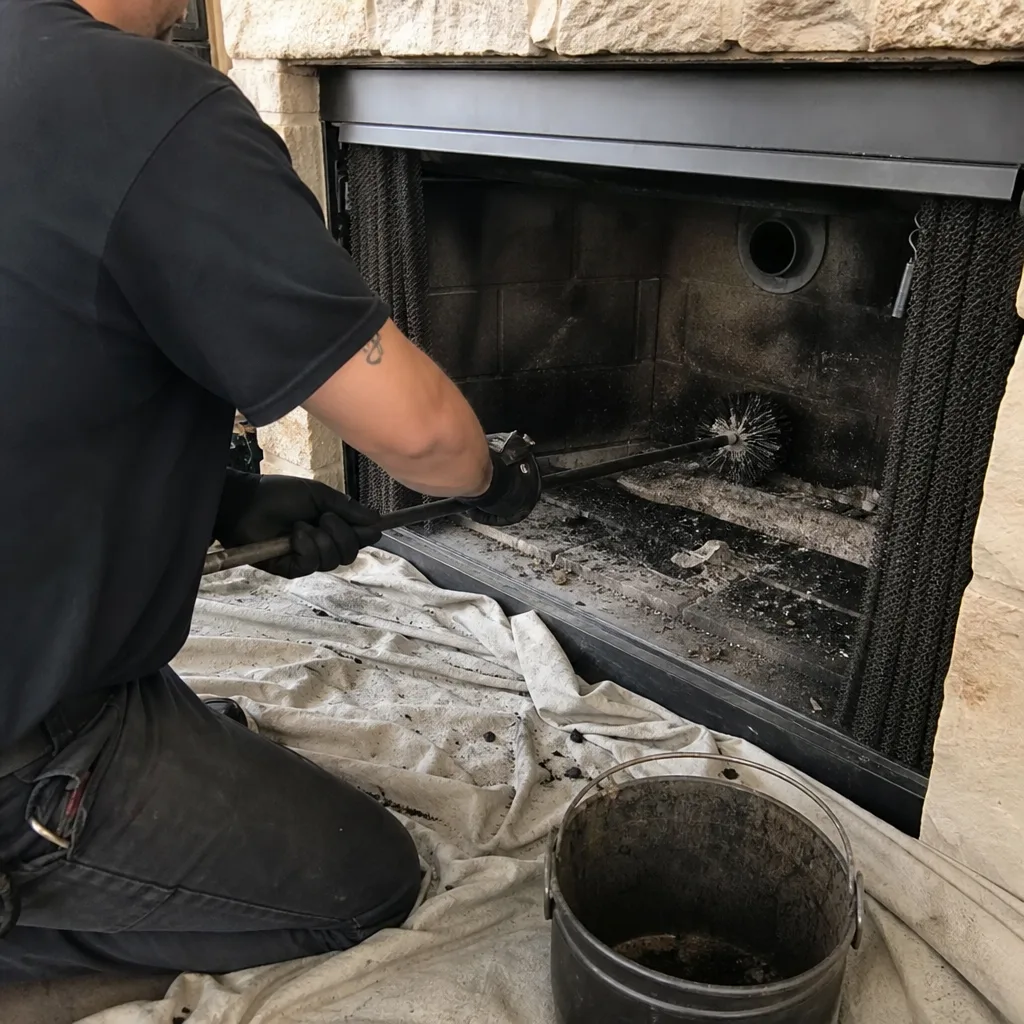
Here’s exactly what happens when a technician arrives for our Level 2 Inspection at your Plano home. No surprises, no add-ons discovered after the job starts.
- Written price and scope delivered before any work begins. Under Clause 1 of the Haven Standard, you get a written price, a written scope of work, and a written warranty before the first drop cloth goes down. If our assessment changes what was quoted, we stop and tell you before the price changes. This is not a formality – it’s the rule that governs every job we do.
- Camera inspection of the flue liner. We run a camera down the flue before we clean, not after. This gives us a documented baseline – liner condition, any cracks or spalling in the terracotta, obstructions, and creosote class – captured in photos that become your permanent record under Clause 4 of the Haven Standard. Most companies skip this step or charge extra for it. We include it because it’s how a Level 2 inspection is supposed to work under NFPA 211, and because the archive practice has been standard for us since 2009.
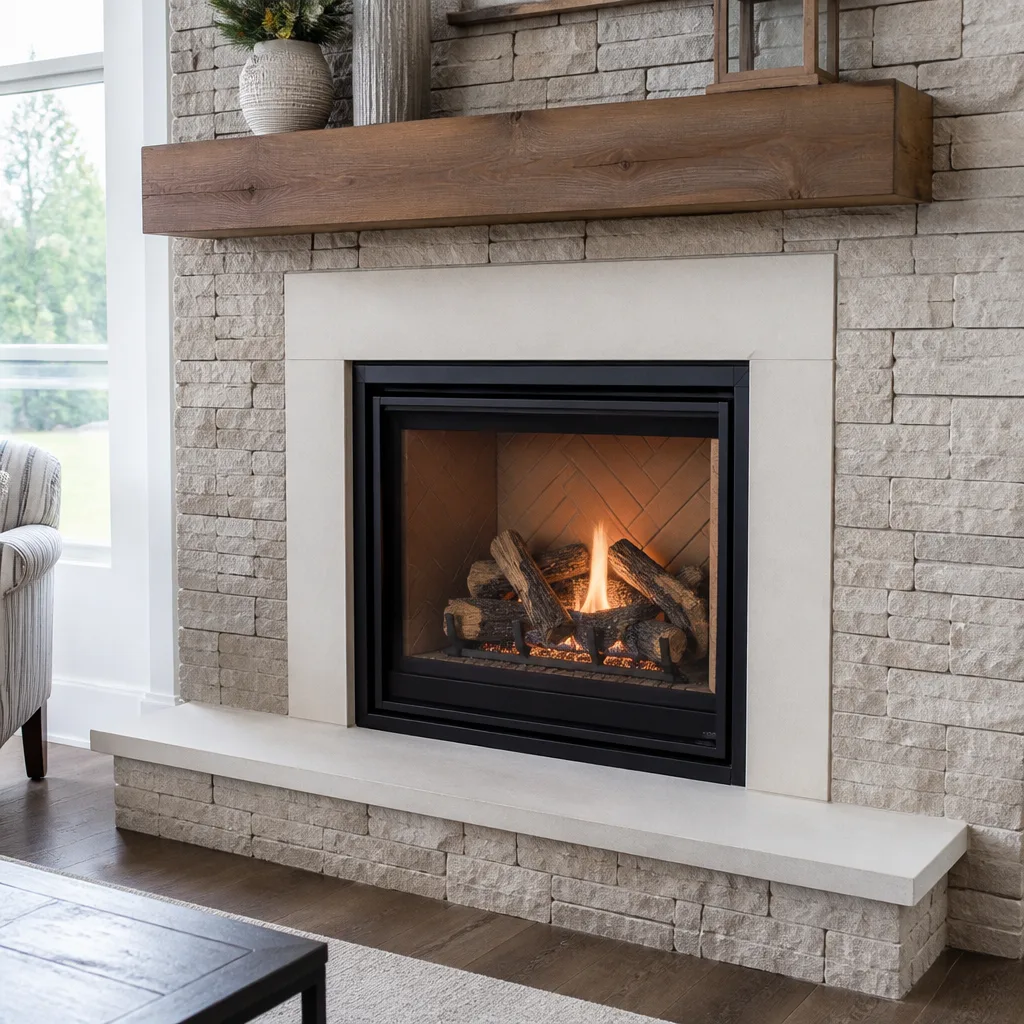
- Smoke chamber and firebox cleaning. The smoke chamber – the funnel-shaped cavity above the firebox that narrows into the flue – collects creosote and soot faster than most homeowners realize. We brush and vacuum the chamber walls, the smoke shelf (the horizontal ledge where debris and water accumulate), the firebox walls, and the firebox floor. We use Copperfield-grade brushes sized to your specific flue dimensions; a brush that doesn’t fit the liner correctly doesn’t clean it correctly.
- Damper inspection and cleaning. The damper plate and damper frame get cleared of soot and debris, and we check that the plate opens and seats fully. A damper that doesn’t close completely wastes heat and lets conditioned air out year-round – a real cost in Plano summers when your HVAC is working overtime. If the damper needs repair or replacement, you’ll see that in writing before anything is touched.
- Ash removal and containment. We remove ash from the firebox floor using commercial-grade vacuum equipment with HEPA filtration. Drop cloths protect the hearth and the surrounding floor. When we leave, the area looks the way it did when we arrived – or cleaner.
- Documented photo record delivered on completion. You receive a photo record of the before and after condition – liner, smoke chamber, firebox, damper. This isn’t a sales tool. It’s documentation you own: useful for insurance purposes, for your records if you sell the home, and for comparison at next year’s cleaning. Every photo is timestamped and labeled.
 Before
 After
AfterFireplace Cleaning Pricing in Plano
Fireplace cleaning in Plano runs $149 to $329 for most residential jobs. Here’s what drives the range:
| Condition / Scope | Typical Price Range |
|---|---|
| Standard cleaning, light to moderate buildup, single fireplace | $149 – $199 |
| Moderate creosote (Class II), smoke chamber included | $199 – $249 |
| Heavy buildup (Class III creosote), extended cleaning time required | $249 – $329 |
| Camera inspection (NFPA 211 Level 2), included on every visit | Included |
| Documented photo record, included on every visit | Included |
| Written price, scope, and warranty before work starts | Included |
A few things that can push a job toward the higher end of the range: multiple fireplaces in the same home, a flue that hasn’t been cleaned in several years, or a firebox that has significant debris or animal nesting (not uncommon in Plano homes near the Rowlett Creek greenbelt, where birds and squirrels find open or damaged chimney caps). If we find any of that during the camera scan, we’ll show you what the camera found and may recommend Soot Removal as part of your revised written price before we proceed.
Class III creosote deserves a specific note. It’s the hardest and most hazardous form of creosote – a dense, glaze-like deposit that forms when flue temperatures run low, often in homes where fires are burned slowly or with green (unseasoned) wood. Removing it takes chemical treatment in addition to mechanical brushing, and the process takes longer. We’ll tell you the class before we quote the job. If a competitor’s written estimate doesn’t mention creosote class, that’s worth asking about – and our Free Second Opinion on any written estimate is available if you want a second set of eyes on what you’ve been quoted.
Materials for any related repairs come from suppliers including DuraFlex and HeatShield, sourced through Haven’s buying network. We name our suppliers because the material quality behind a repair is part of what you’re paying for, and because a written quote that lists materials is a quote you can compare accurately.
There is no “call for a quote” here. The price range above is real. For a number specific to your fireplace and your current conditions, call (469) 240-3101 – it takes about three minutes to get an accurate ballpark over the phone, and the final written price is locked before any work starts.
What the Camera Found – and Why It Matters in Plano
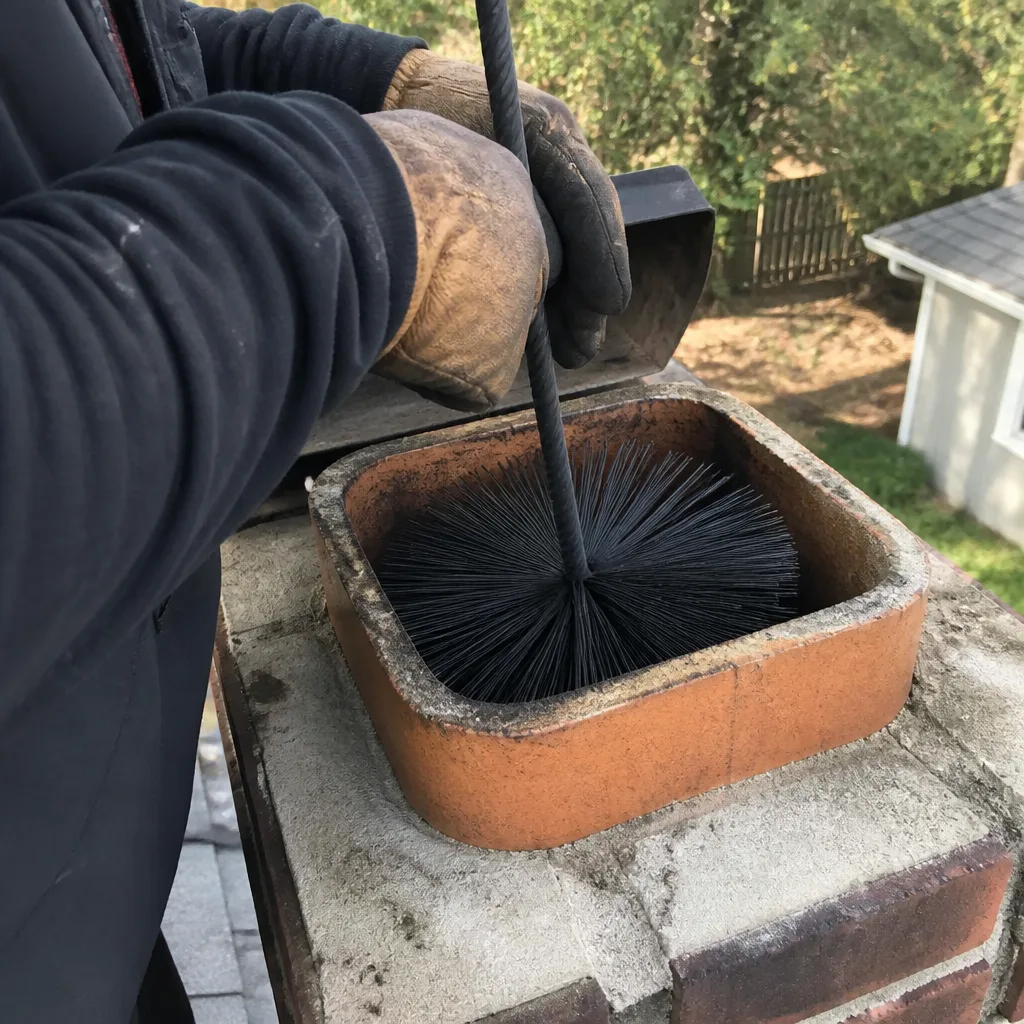
Plano sits in a climate zone that runs the full range: hard freezes in January, 100-degree summers, and humidity that spikes in spring and fall. That cycle – freeze, thaw, heat, moisture – is hard on masonry. Terracotta flue liners crack along mortar joints. Brick spalls (the face of the brick flakes off) when water gets behind the surface and expands. Crowns develop hairline fractures that let water in, which accelerates everything else.
None of that is visible without a camera in the flue. A flashlight look from the firebox opening will miss cracks in the middle sections of the liner and any damage above the roofline. This is why our Level 1 Inspection and Level 2 protocols specify camera inspection – not because it’s a nice extra, but because it’s the only way to know the actual condition of the system.
In Plano neighborhoods like Legacy, Willow Bend, and the older sections near downtown, we regularly see liner damage that the homeowners had no idea was there – because no one had ever put a camera in. Once documented, the condition is yours to act on with clear information and a written price. That’s the starting point for every job under the Haven Standard, including our Chimney Cleaning & Sweep services, and it’s been how we’ve operated across more than 38,000 chimney inspections and cleanings since 2009.
Our parent home page covers the full scope of what Emberly Chimney Cleaners does, if you want the broader picture.
FAQs – Fireplace Cleaning in Plano
How much does fireplace cleaning cost in Plano, TX?
Fireplace cleaning in Plano costs between $149 and $329 for most residential jobs, with the final price depending on creosote class, the number of fireplaces, and whether the smoke chamber or damper needs additional attention. Every job includes a camera inspection and documented photo record at no added charge, and you receive a written price before any work begins. Call (469) 240-3101 for a specific estimate – it’s free and takes a few minutes.
How often should a fireplace be cleaned?
NFPA 211 recommends annual inspection and cleaning for any fireplace that sees regular use – meaning anything more than a few fires a season. In practice, Plano homeowners who use their fireplace from November through February and burn seasoned wood should schedule a cleaning once a year, ideally before the season starts in fall. If you’re not sure when yours was last cleaned, the camera inspection will tell you the current condition and let you make that call with actual information rather than a guess.
Is fireplace cleaning dangerous to do myself?
Routine ash removal from the firebox floor is a safe DIY task once the fire has been cold for at least 72 hours. Cleaning the smoke chamber, brushing the flue liner, and assessing creosote class are not – the smoke chamber involves tight spaces and loose debris, and disturbing significant creosote buildup without proper containment and vacuum equipment can coat a room in fine black particulate. More critically, Class II and Class III creosote on flue liner walls is a fire hazard that requires professional assessment and, in some cases, chemical treatment. The camera inspection is the part that matters most and cannot safely be replicated with a flashlight and a mirror. We strongly recommend a trained technician for anything beyond surface-level ash cleanup.
What’s the difference between fireplace cleaning and chimney cleaning?
Fireplace cleaning focuses on the firebox, smoke shelf, smoke chamber, and damper – the components you interact with directly and that accumulate the most visible buildup. Chimney cleaning extends up through the full flue liner to the crown and chimney cap at the top of the stack. At Emberly Chimney Cleaners Plano, our standard cleaning visit covers both: we don’t clean the firebox and leave the flue uninspected, because the system doesn’t work in isolation. The camera goes all the way up. If you want to understand everything the full-system service covers, the Chimney Cleaning & Sweep in Plano page breaks it down in detail.
Schedule Your Fireplace Cleaning in Plano
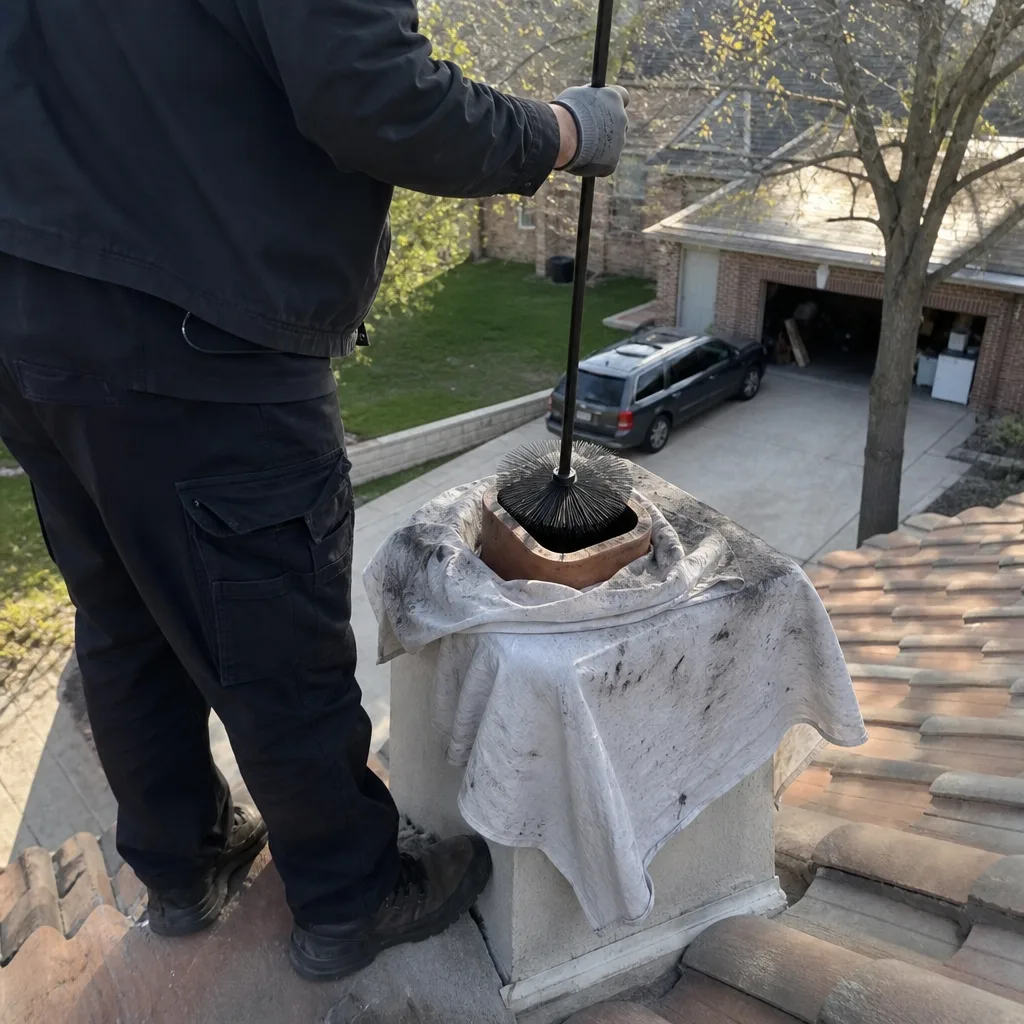
If you’re in Plano and your fireplace hasn’t been cleaned this year – or you genuinely can’t remember when it was last cleaned – call (469) 240-3101. A live person answers any time of day or night. We’ll give you a price range over the phone, confirm a time that works, and send you a text when your technician is on the way. When they arrive, the written price and scope come before any work starts.
If you have a written estimate from another company and want a second opinion, bring it. The review is free, and we’ll tell you plainly what we think – whether that means matching the quote, explaining why ours is different, or telling you the other estimate looks fair. That’s what the Free Second Opinion offer actually means in practice.
The 365-Day Done Right Promise covers every job. If something isn’t right after we leave, we come back and make it right. That’s written into every job under the Haven Standard, not offered as a perk on request.
Written by Corrine Halstead, Owner at Emberly Chimney Cleaners Plano, serving Plano.