
Last updated September 22, 2026
Level 1 sweep and inspection to the NFPA 211 annual standard - flue, crown, cap, and flashing checked and photographed
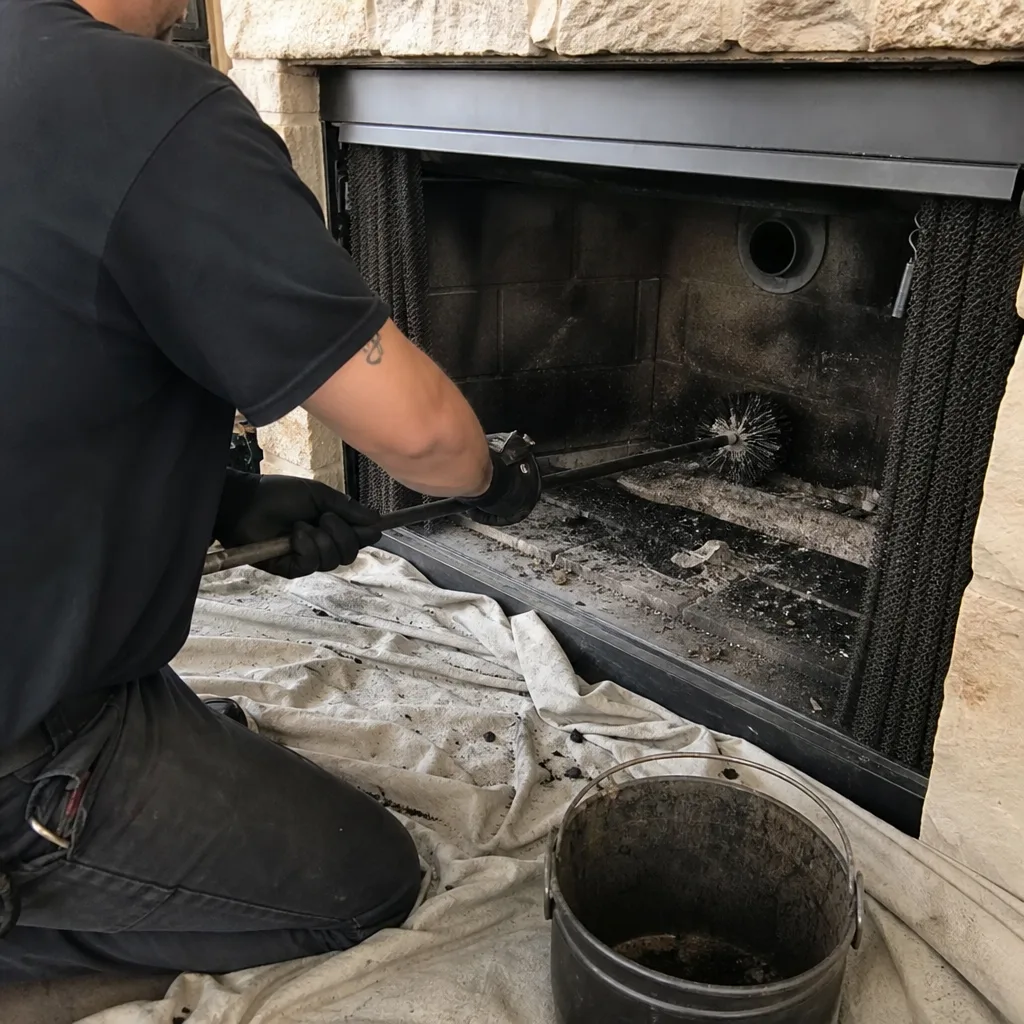
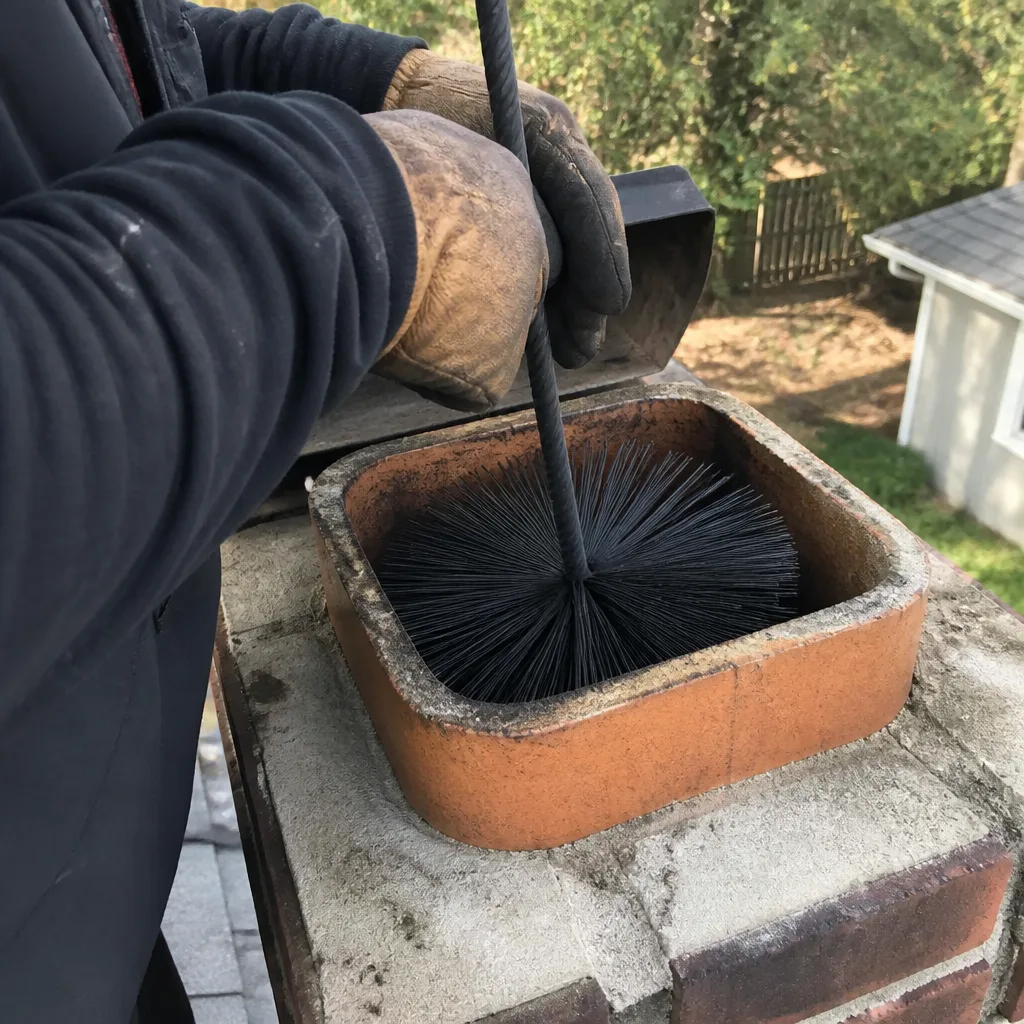
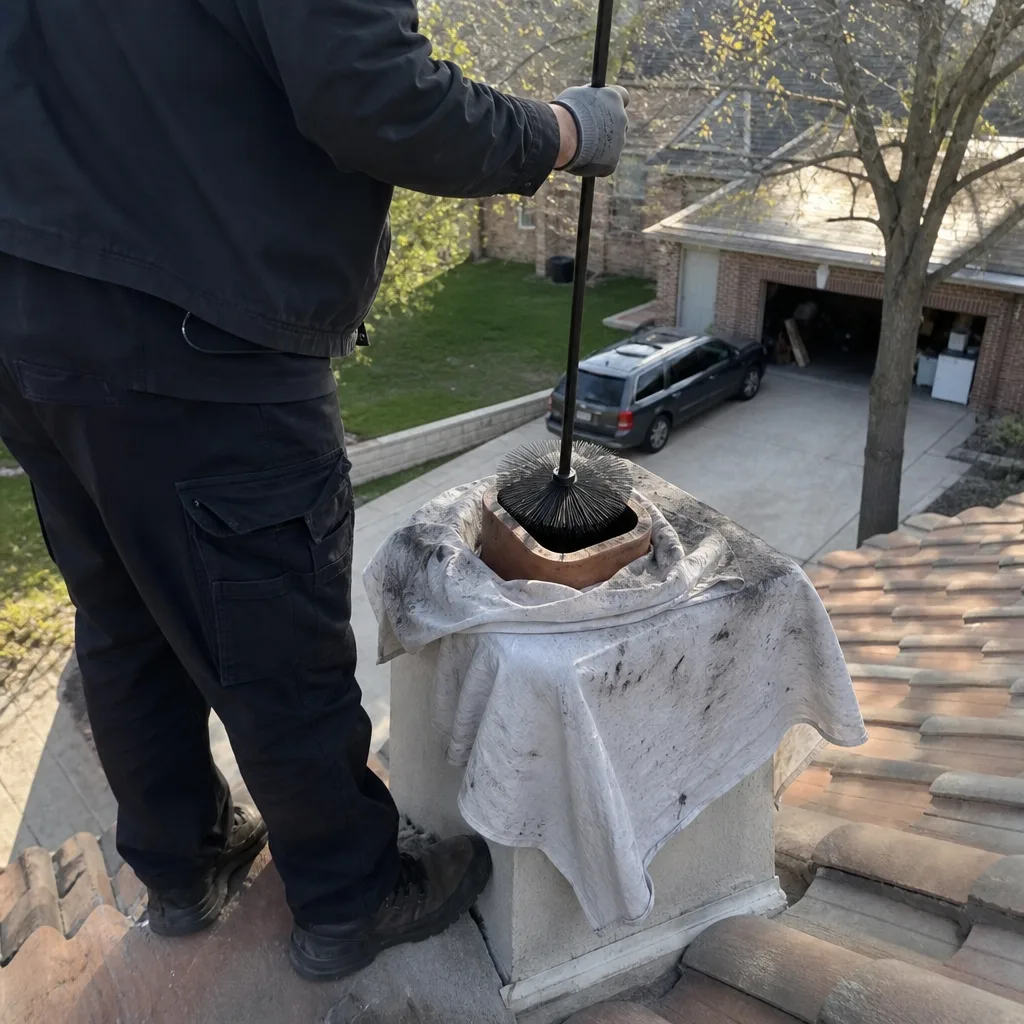
Chimney sweep logs do not sweep chimneys. They loosen some creosote - which then falls where a brush and vacuum still have to collect it.


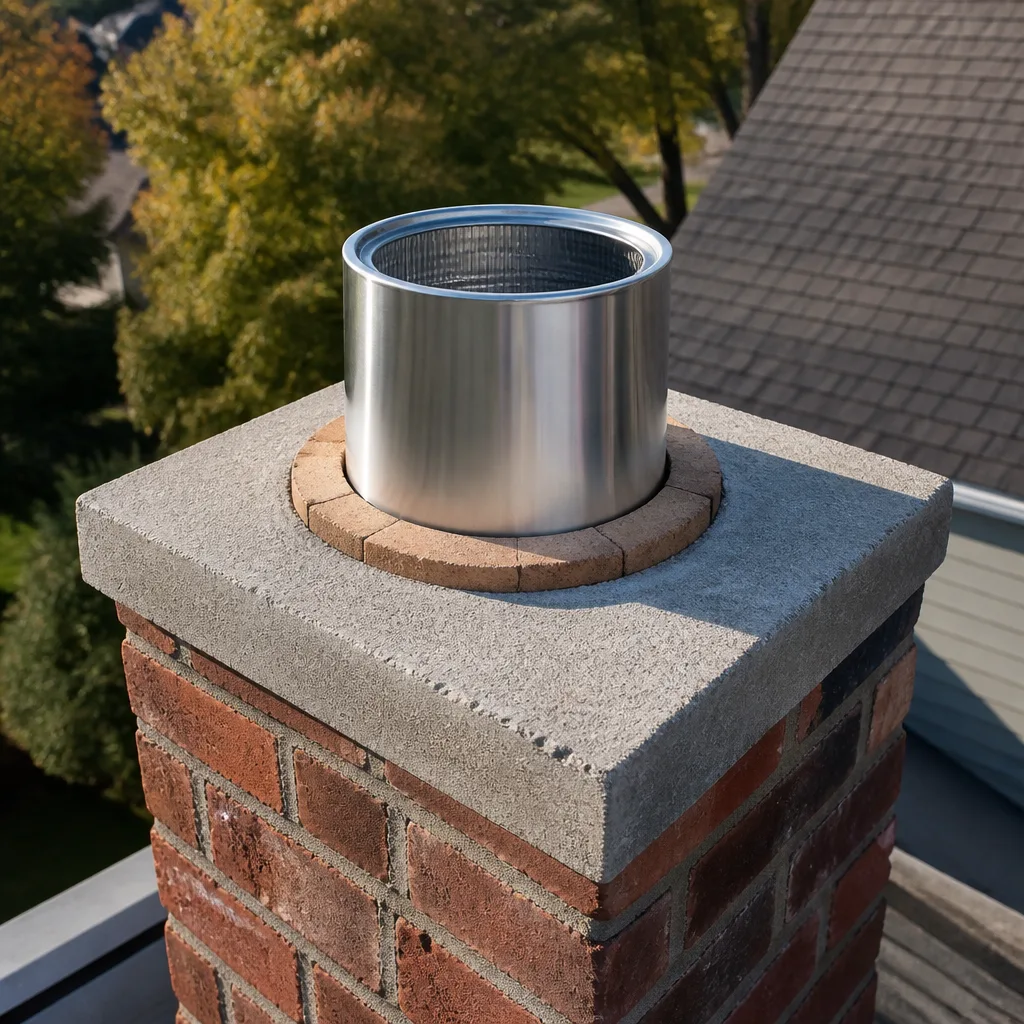
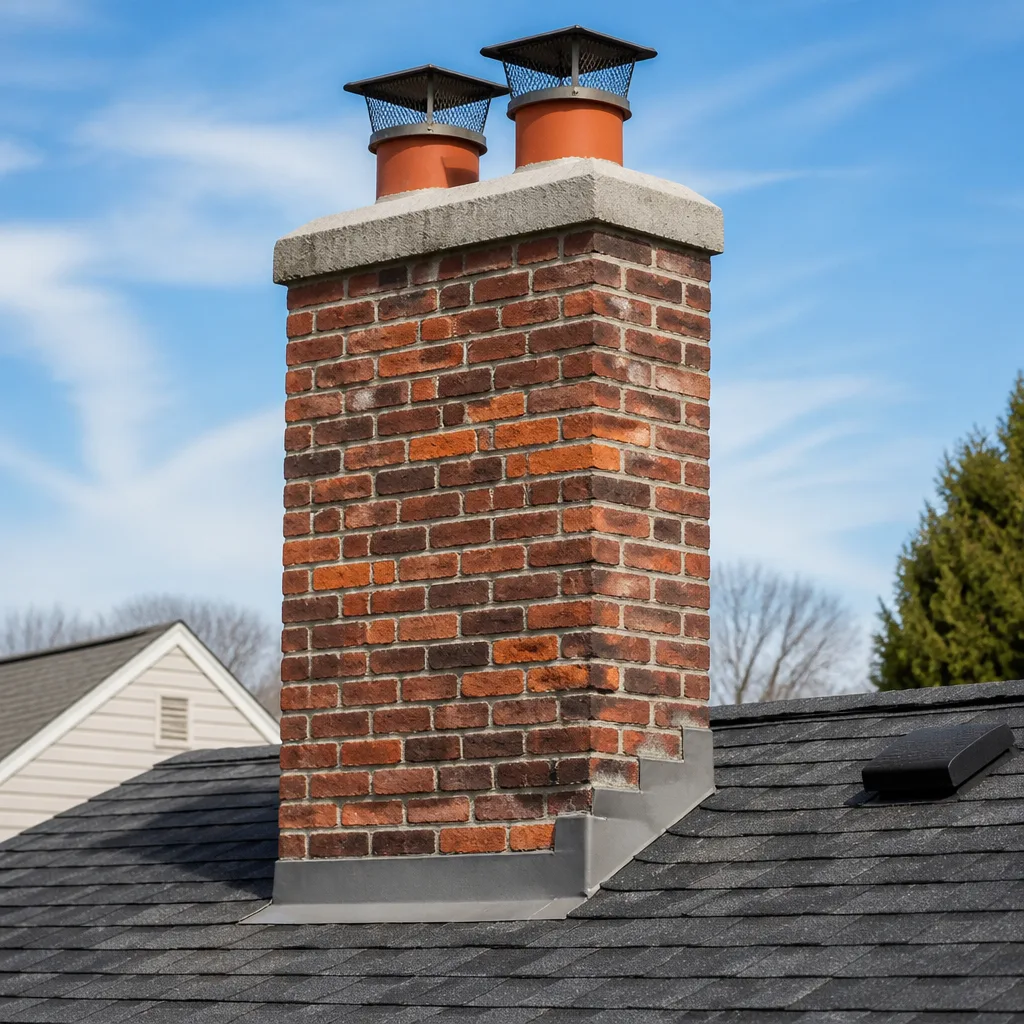
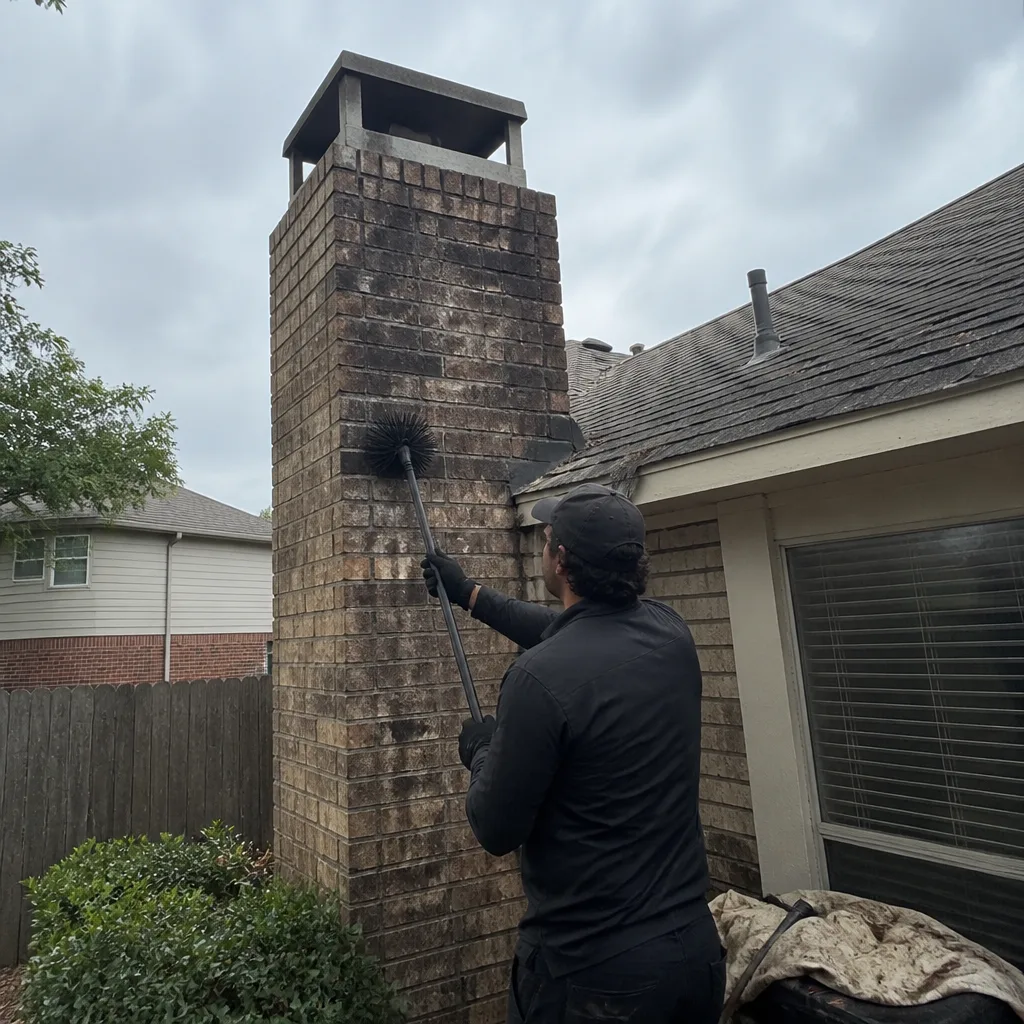 Before
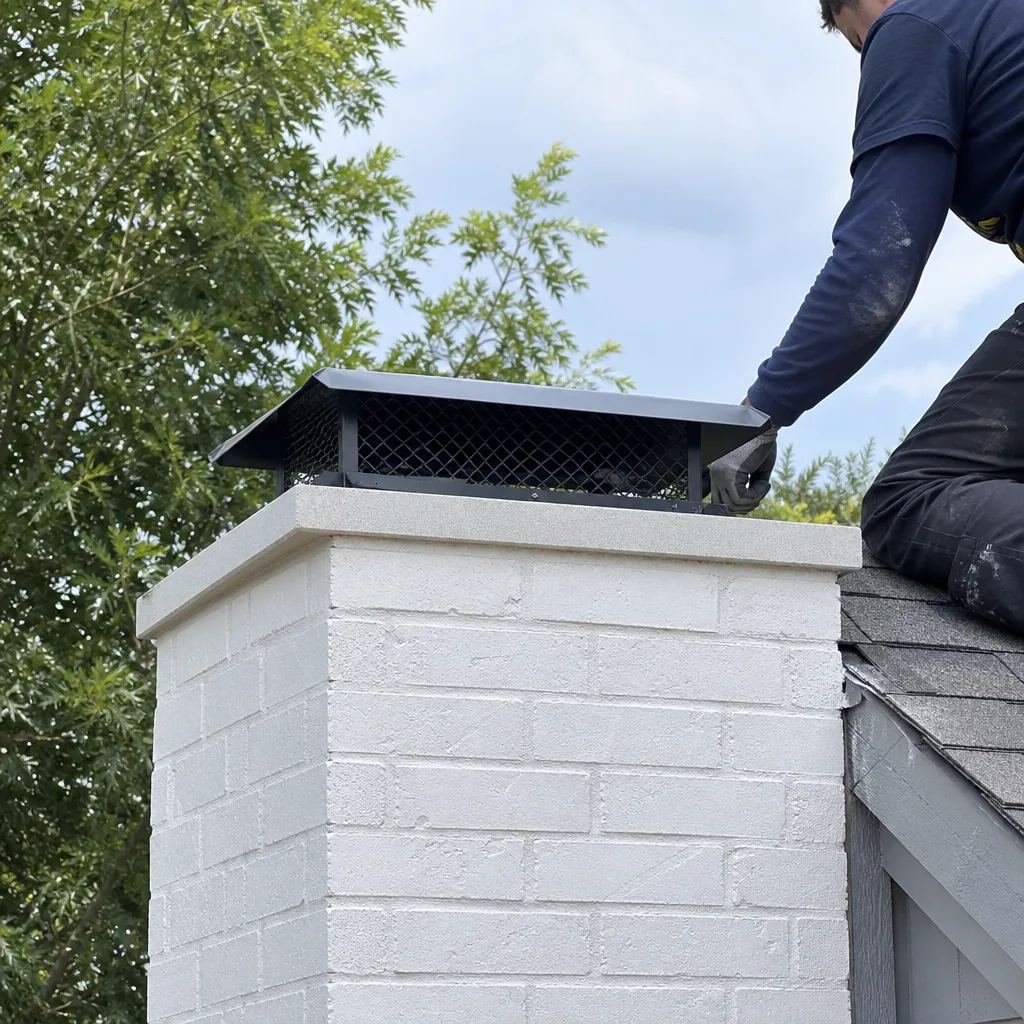 After
After Before
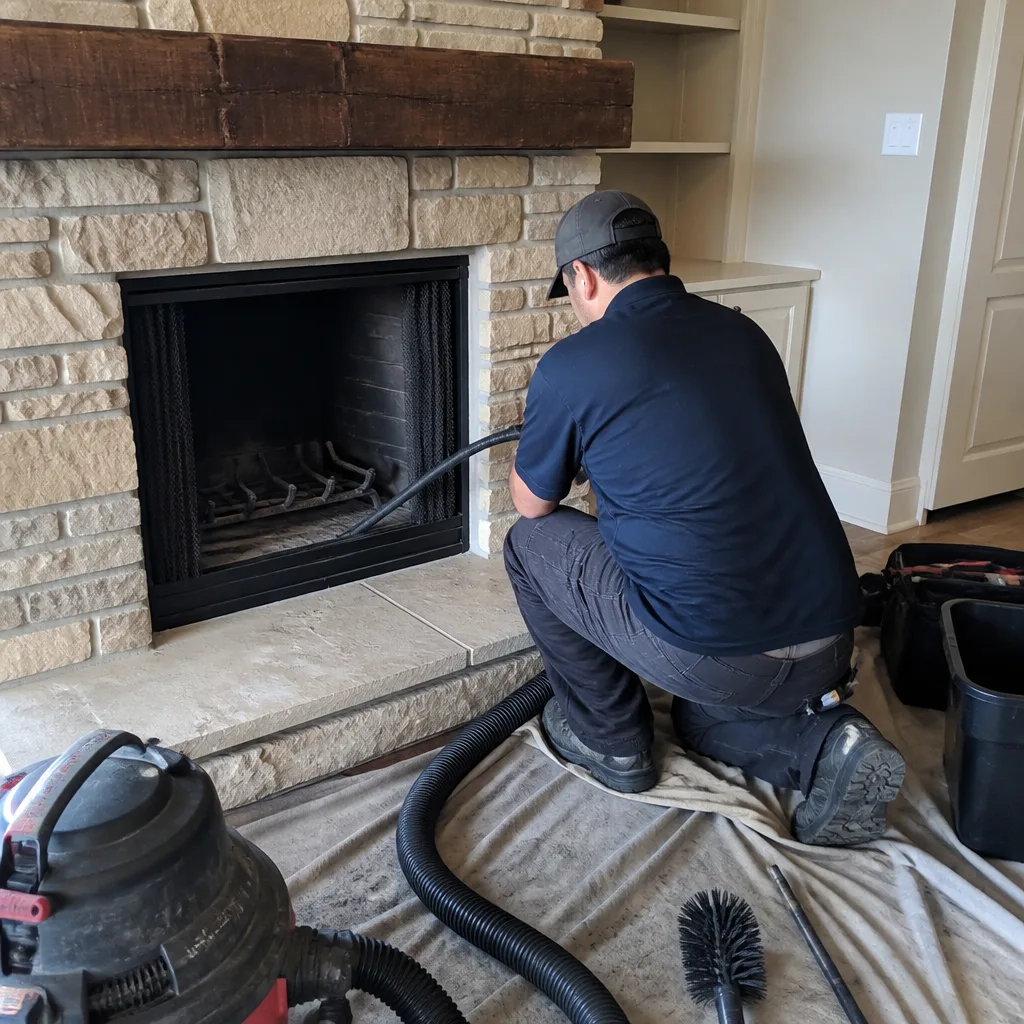 After
After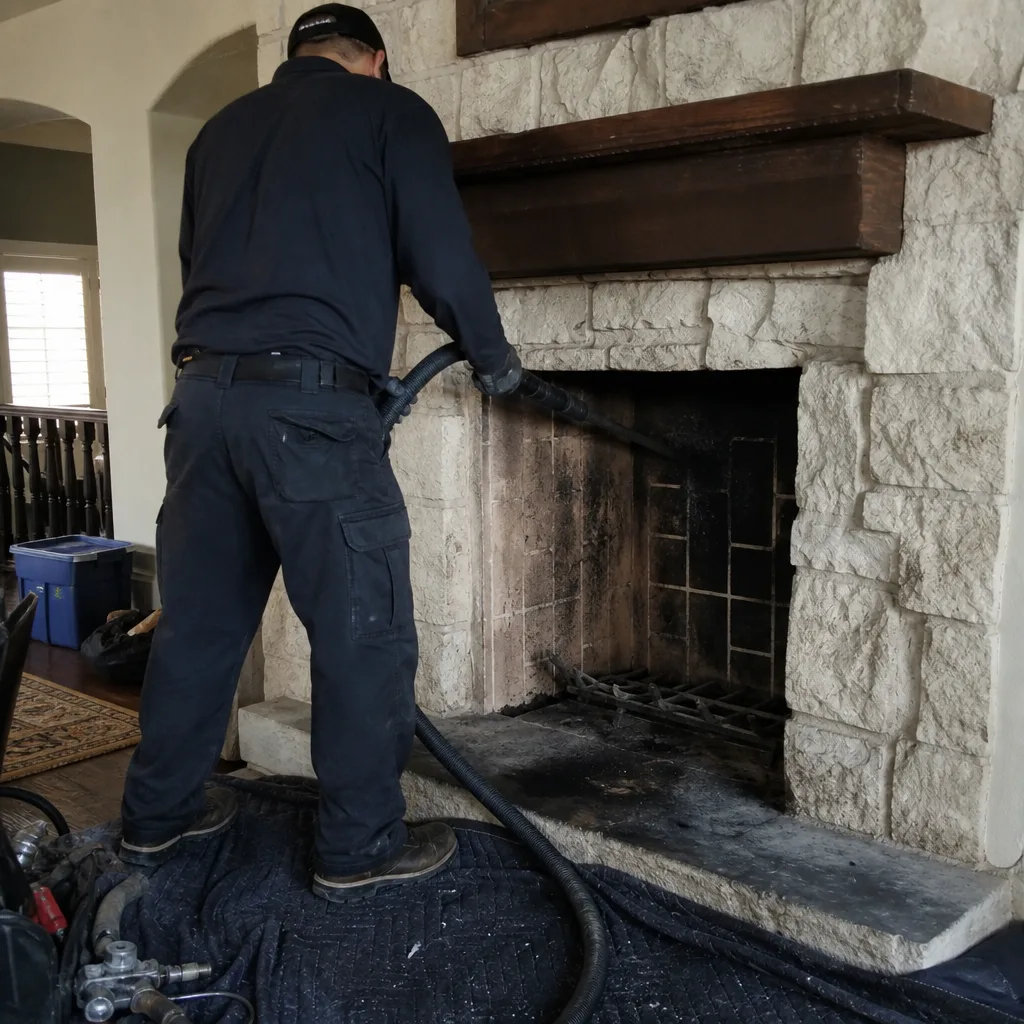 Before
 After
AfterChimney Cleaning Permits, Codes & Inspections in TX: What You Need to Know
Here’s something most Plano homeowners learn too late: Texas does not require a license to clean chimneys, yet the same sweep who legally cleaned your flue can perform a liner replacement that violates city code and voids your insurance. In 2023, a homeowner in Plano’s Willow Bend area discovered this gap the hard way after a chimney fire. Their insurer denied the claim because the stainless steel liner had been installed without a permit or inspection, even though the “sweep” who did the work had cleaned their chimney for years. This guide explains exactly which chimney services trigger permits in Plano, which codes actually apply, and how to protect yourself with documentation that holds up after a fire. For a deeper dive, see our Complete Guide to Chimney Cleaning in Plano.
Quick Answer
Chimney cleaning and basic inspections never require a permit in Texas or Plano. However, liner replacements, chase cover installations, cap work above certain dimensions, and any structural firebox repair typically require a permit pulled through Plano’s Development Services. The National Fire Protection Association’s NFPA 211 standard is adopted into Texas law through the International Residential Code, making it enforceable even though no state license governs sweeps themselves. For insurance purposes after a chimney fire, only a written NFPA 211 Level 2 inspection report with photo documentation satisfies the “documentation of compliance” that adjusters require.
Table of Contents
- The Texas License Gap: What “Unregulated” Actually Means
- How NFPA 211 Becomes Legally Enforceable in Texas
- Which Chimney Services Require a Plano Building Permit
- The IRC Sections That Govern Your Fireplace
- What Insurance Adjusters Actually Want After a Chimney Fire
- Why a Level 2 Inspection Is the Only Documentation That Matters
- Who Can Pull a Permit in Plano: Contractor vs. Homeowner
- Common Mistakes to Avoid
- When to Call a Professional
- Frequently Asked Questions
- The Bottom Line
 Before
 After
AfterThe Texas License Gap: What “Unregulated” Actually Means
Texas is one of roughly twenty states with no licensing requirement for chimney sweeps. Anyone with a brush and a ladder can advertise the service. The Texas Department of Licensing and Regulation (TDLR) does not list chimney sweeping, chimney inspection, or even chimney repair among its regulated occupations. This surprises most homeowners in Plano’s Kings Ridge or Shoal Creek neighborhoods, where homes built between 1985 and 2005 often have complex factory-built fireplace systems that demand specialized knowledge. If you’re unsure whether your chimney needs attention, review our Chimney Cleaning Warning Signs: A Plano Homeowner’s Reference Guide.
But “unregulated” does not mean “without rules.” It means the rules are scattered across municipal codes, building permits, and insurance contract language that most sweeps never mention. We’ve inspected chimneys in Plano where a previous sweep installed a chimney cap that violated the city’s wind-load requirements, or replaced a chase cover without the required drip-edge detail that Plano’s Development Services enforces for water intrusion prevention. The homeowner paid for the work, received no documentation, and discovered the problem only when selling the house and failing the buyer’s inspection.
The gap creates three specific risks for Plano homeowners:
- No recourse for faulty work: Without a state license board, there is no regulatory body to file a complaint against a sweep who damages your flue liner or installs a cap incorrectly.
- Insurance denial on technical grounds: Homeowner’s policies contain “compliance with code” clauses. Work performed without required permits can trigger these clauses even if the work itself was competent.
- Permit liability transfers to you: In Plano, unpermitted work discovered during a real estate transaction becomes the seller’s responsibility to bring to code, often at emergency rates.
We’ve seen this pattern repeat across Plano’s older neighborhoods, particularly in the area east of Central Expressway where 1970s and 1980s construction used clay flue liners now reaching end of service life. A sweep cleans the chimney, notices the deteriorated liner, offers to “take care of it,” and installs a stainless steel replacement without ever mentioning that Plano requires a permit for this work. The homeowner believes they’ve solved the problem. They’ve actually created a compliance gap that sits invisible until a claim is filed.
How NFPA 211 Becomes Legally Enforceable in Texas
NFPA 211, the Standard for Chimneys, Fireplaces, Vents, and Solid Fuel-Burning Appliances, is published by the National Fire Protection Association. It is not federal law. It is not Texas state law. Yet it carries legal force in Plano through a specific adoption chain that every homeowner should understand.
Texas does not maintain a statewide building code. Instead, the Texas Legislature authorizes municipalities to adopt model codes, and most, including Plano, adopt the International Residential Code (IRC) with local amendments. The IRC references NFPA 211 by incorporation for chimney and fireplace standards. When Plano’s City Council adopted the IRC, NFPA 211 became enforceable city law. A Plano building inspector can cite NFPA 211 violations. A Plano permit for liner work can be denied for NFPA 211 non-compliance. And critically, a Plano homeowner’s insurance policy can invoke NFPA 211 as the “recognized standard” that the policyholder was required to follow.
This matters because NFPA 211 defines three levels of inspection:
- Level 1: Visual examination of readily accessible portions. Appropriate for annual maintenance when no changes have been made to the system.
- Level 2: Includes Level 1 plus examination of accessible portions by video scanning or other means, and inspection of attics, crawl spaces, and basements as appropriate. Required upon sale or transfer of property, after an operating malfunction or external event, or before relining. This is the standard we established as default practice at Emberly Chimney Cleaners Plano home in 2009, before regulators or insurers asked for it.
- Level 3: Includes Level 1 and 2 plus examination of concealed areas by demolition or removal of components. Required when a hazard is suspected but cannot be confirmed by Level 2 methods.
Most sweeps in the Plano market perform what they call an “inspection” that meets only Level 1 criteria: a flashlight look from the firebox and possibly the roof. This satisfies no documentation standard for insurance or real estate transfer. NFPA 211 explicitly requires Level 2 for property transactions and for any work that alters the system, including liner replacement. When a Plano homeowner needs to prove compliance, the Level 1 report is worthless. The Level 2 report with video documentation is the only version that satisfies the standard.
Plano’s climate amplifies why this matters. Our freeze-thaw cycles, particularly the hard freezes that hit every few winters, accelerate masonry deterioration. A Level 1 inspection misses crown cracks and liner gaps that a camera reveals. We’ve documented spalling brick and separated flue tiles in Plano homes where the previous year’s “inspection” reported the system “in good shape” based on a flashlight look from below.
Which Chimney Services Require a Plano Building Permit
Plano’s Development Services Department classifies chimney work by scope and structural impact. The permit requirements are specific, and most sweeps either do not know them or do not disclose them. Here is the breakdown based on Plano’s adopted IRC amendments and our direct experience pulling permits for work in neighborhoods from Legacy West to Russell Creek. For a step-by-step maintenance framework, see our Chimney Cleaning & Sweep Maintenance Checklist for Plano Homeowners.
Never requires a permit:
- Chimney sweeping and cleaning (mechanical removal of creosote and debris)
- NFPA 211 Level 1 or Level 2 inspection
- Minor masonry repair under $500 that does not alter structural components
- Damper adjustment or replacement of identical unit
Often requires a permit:
- Chimney liner replacement or installation: Any work that changes the flue’s internal dimensions, material, or venting classification requires permit and inspection. This includes stainless steel, aluminum, and cast-in-place systems. Plano requires a rough inspection before closure and a final inspection after completion.
- Chase cover replacement: If the replacement alters the chase dimensions, materials, or attachment method, permit required. Simple like-for-like replacement of a standard galvanized cover on an existing chase may not, but most Plano homes with factory-built fireplaces have custom chase covers where replacement triggers review.
- Chimney cap installation over certain dimensions: Caps exceeding 24 inches in any dimension, or any cap requiring structural attachment to the crown or chase, require permit. Standard band-around-flue caps under this threshold generally do not.
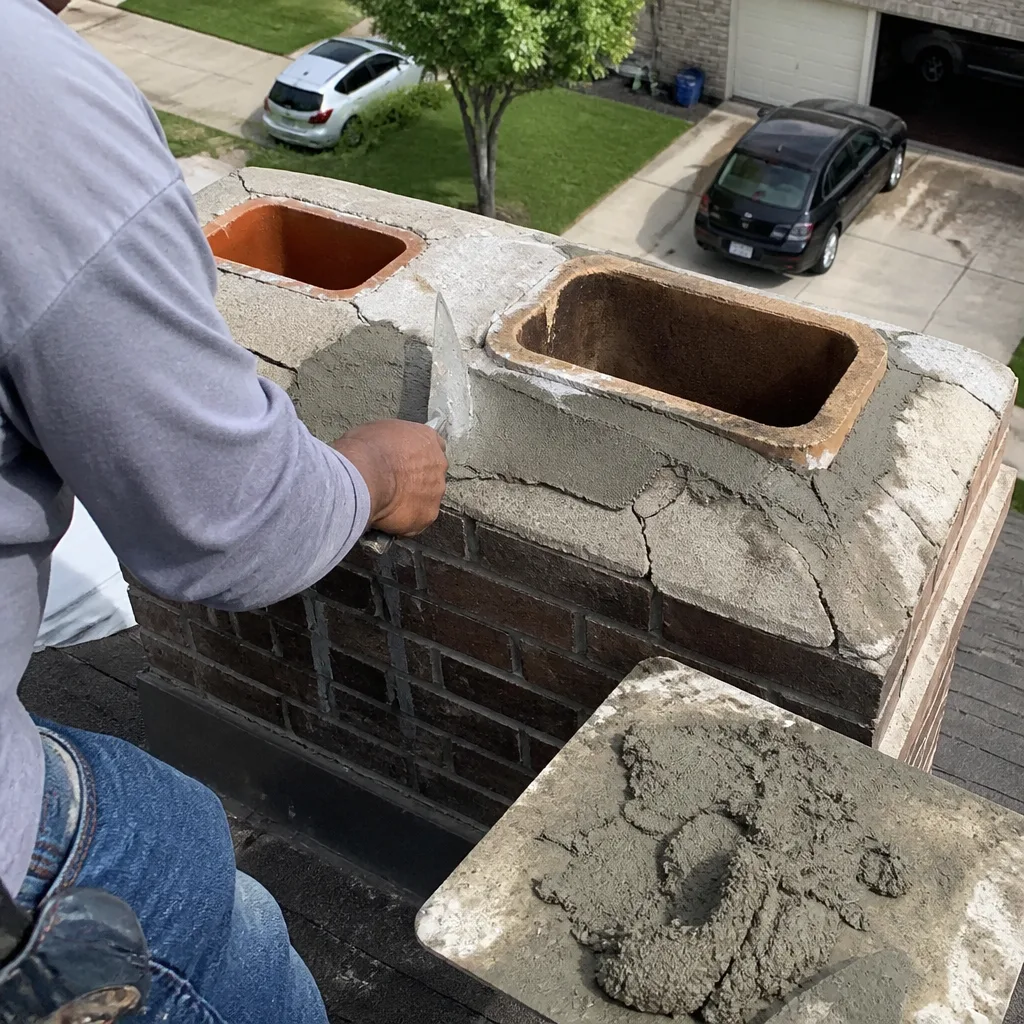
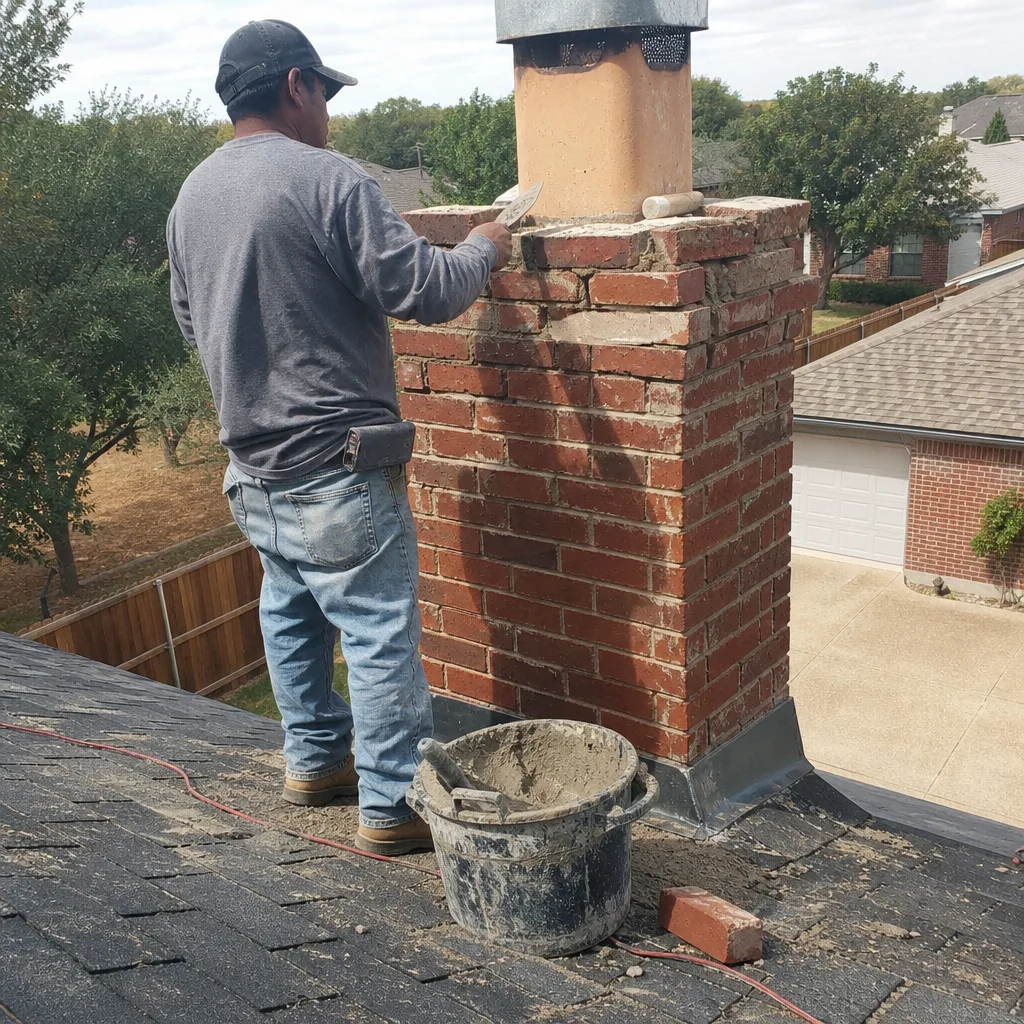
- Crown replacement or structural repair: Any work that removes and replaces the concrete crown, or repairs cracks exceeding 1/4 inch with structural implications.
- Firebox rebuild or refractory panel replacement in factory-built units: Factory-built fireplace manufacturers specify approved replacement panels; deviation requires engineering review and permit.
- Smoke chamber parging: Application of refractory mortar to alter smoke chamber dimensions or surface condition.
Always requires a permit:
- New chimney construction
- Chimney demolition below roofline
- Conversion from wood-burning to gas (or vice versa) with venting changes
- Any work requiring roof penetration modification
The permit process in Plano typically takes 2-3 business days for plan review on standard items, with inspections scheduled through the city’s online portal. We’ve pulled permits for liner work in Plano’s Windhaven and Avignon Windhaven communities where the original builder-grade clay liners failed prematurely due to thermal shock from our temperature swings. In each case, the permit required submission of the liner manufacturer’s specification sheet, our installation plan, and proof of appropriate sizing per NFPA 211.
Homeowners should verify permit status before work begins. Plano’s Development Services maintains public permit records searchable by address. Any sweep or contractor who cannot provide a permit number upon request, or who suggests “we don’t need one for this,” is creating the exact compliance gap that insurers exploit for denial.
The IRC Sections That Govern Your Fireplace

Plano enforces the International Residential Code with Texas amendments. Three IRC chapters contain the specific provisions that apply to most residential chimney and fireplace work in Plano. Understanding these sections helps homeowners ask informed questions and recognize when a sweep’s proposal conflicts with adopted code.
R1001 - Masonry Fireplaces
This section governs site-built masonry fireplaces, which remain common in Plano homes constructed before 1990, particularly in the Russell Creek and Park Forest areas. Key requirements include:
- Firebox walls minimum 10 inches thick for brick or 12 inches for stone, with firebrick lining
- Smoke chamber walls minimum 8 inches thick, with smooth parged interior
- Chimney walls minimum 4 inches thick, with flue liner separated from masonry by minimum 1/2 inch grout fill or suitable insulation
- Hearth extension dimensions based on fireplace opening size
We’ve inspected masonry fireplaces in Plano where a previous “repair” had reduced the smoke chamber wall thickness below code by applying excessive parging material, or where the flue liner was not properly bedded in grout, creating a path for combustion gases to reach the framing. These are R1001 violations that a Level 2 camera inspection reveals but a flashlight look misses.
R1003 - Chimneys
This section applies to all chimneys, masonry and factory-built. Critical provisions for Plano include:
- Chimney height minimum 3 feet above roof penetration and 2 feet higher than any portion of building within 10 feet
- Flue lining required for all masonry chimneys, with specific material approvals
- Clearance to combustibles: 2 inches minimum for masonry chimneys, or as specified for listed factory-built systems
- Termination cap required, with specific mesh sizing for spark arrestation
Plano’s wind exposure, particularly in open developments like Legacy West and along the Bush Turnpike corridor, makes chimney height and cap specification critical. We’ve replaced caps in these areas where the original installation used inadequate mesh or attachment, leading to water intrusion and, in one case, a bird nest obstruction that caused a smoke backup.
R1004 - Factory-Built Fireplaces
This section governs listed, pre-engineered fireplace systems installed in Plano from the 1980s forward. The critical principle: factory-built units must be installed per the manufacturer’s instructions, which become part of the adopted code. Key requirements include:
- Only listed chimney systems from the same manufacturer may be used
- Clearances to combustibles as specified in listing, not reduced by any field modification
- Refractory panels replaced only with manufacturer-approved parts
- No structural modifications without engineering approval
We’ve encountered dangerous violations in Plano where a sweep or handyman installed generic refractory panels in a Heatilator or Superior factory-built unit, or connected a listed fireplace to an unlisted chimney system. These are immediate fire hazards and automatic insurance problems if discovered after a loss.
What Insurance Adjusters Actually Want After a Chimney Fire
The moment after a chimney fire, documentation becomes currency. Homeowner’s insurance policies contain specific language about “maintenance,” “compliance with applicable codes,” and “documentation of professional service.” Adjusters in Texas are trained to look for gaps in this documentation, and chimney fires present a natural opportunity for denial because the damage is often internal and the causation complex.
Here’s what we’ve learned from Plano homeowners who’ve navigated claims, and from our direct experience providing documentation that satisfies or fails adjuster review:
The adjuster’s checklist:
- Proof of annual inspection: Was the chimney inspected within the 12 months before the fire? By whom? What standard was used?
- Proof of cleaning if indicated: If the inspection found creosote buildup requiring removal, was it performed?
- Documentation of any modifications: Was the liner, cap, or any component replaced? By whom? Under what permit? With what inspection?
- Compliance with manufacturer’s requirements: For factory-built units, were all components listed and compatible?
- Pre-loss condition documentation: Photos, video, or written reports establishing the chimney’s condition before the fire.
The critical phrase in most Texas homeowner’s policies is “documentation of compliance.” This is not a receipt for a sweep. It is not a handwritten note saying “chimney cleaned.” It is a formal report, prepared to a recognized standard, with dated evidence of the system’s condition and any deficiencies found.
A Level 1 inspection report, even from a legitimate company, typically contains only a checkbox and a sentence: “Chimney inspected, found satisfactory.” This satisfies nothing. An NFPA 211 Level 2 report contains:
- Date, address, and technician identification
- Appliance and chimney identification (manufacturer, model, dimensions)
- Clearance measurements to combustibles where accessible
- Flue liner condition assessment with video frame grabs or photo documentation
- Creosote classification (Class I, II, or III) and location
- Crown, cap, and exterior masonry condition
- Smoke chamber and firebox condition
- Specific deficiencies cited with NFPA 211 references
- Recommendations prioritized by hazard level
Clause 4 of the Haven Standard requires this documentation on every job we perform. We’ve maintained this archive since 2009, and Plano homeowners with our reports have successfully navigated claims that were initially questioned. One homeowner in the Glenhollow Estates area used our Level 2 report from six months prior to prove that a liner separation, not creosote neglect, caused the fire that damaged their second story. The adjuster initially suspected lack of maintenance; the dated video documentation showed the defect pre-existed and had been properly reported.
Without this documentation, the homeowner bears the burden of proof. With it, the burden shifts to the insurer to show why the documented condition does not support the claim.
Why a Level 2 Inspection Is the Only Documentation That Matters
We’ve used the term “Level 2” throughout this guide. Here’s exactly what it means in practice, why we made it our default in 2009, and why it remains the only inspection grade that protects Plano homeowners in permit and insurance contexts.
A Level 2 inspection requires internal examination of the flue by video scanning. At Chimney Cleaning & Sweep in Plano, we use a self-leveling camera system that transmits high-resolution video to a monitor the homeowner can view in real time. The camera documents:
- Flue liner integrity: cracks, gaps, spalling, displacement
- Creosote deposits: location, thickness, classification
- Obstructions: nests, debris, construction material
- Construction anomalies: offset flues, unlined sections, improper connections
- Water damage: staining, erosion, freeze-thaw deterioration
The video is recorded, frame grabs are captured for the written report, and the entire file is archived under the address. This is not an add-on service. It is standard on every inspection we perform, required by Clause 4 of the Haven Standard.
Compare this to what most Plano homeowners receive: a technician with a flashlight, possibly extending a mirror on a pole, who reports “looks good from here.” This Level 1 approach cannot detect the defects that cause chimney fires and carbon monoxide intrusion. It cannot document liner condition for insurance. It cannot support a permit application for subsequent work. It is, for most purposes, a receipt for a visit rather than a technical evaluation.
Plano’s housing stock makes Level 2 particularly essential. The city’s rapid growth from 1990 to 2010 included thousands of homes with factory-built fireplaces installed by builders seeking cost efficiency. These systems have 15-25 year service lives for critical components. A home built in 2005 with original refractory panels and a galvanized chase cover is now at or past replacement timing. Only camera inspection reveals whether the liner has deteriorated, whether the panels have cracked, and whether water intrusion has compromised the chase structure.
We’ve performed Level 2 inspections in Plano’s Willow Bend area where the camera revealed a completely separated flue liner that the homeowner’s previous “annual inspection” had missed for three consecutive years. The separation was visible only from inside the flue, invisible from top or bottom with a flashlight. The homeowner had been burning fires in a system that was venting combustion gases into the chimney cavity, a recognized carbon monoxide hazard.
For permit applications, Level 2 documentation serves as the baseline condition report. Plano’s Development Services does not require it for permit issuance, but we submit it with every liner replacement permit to establish the pre-existing condition that justifies the work. This protects the homeowner if questions arise later about whether the work was necessary or properly scoped.
Who Can Pull a Permit in Plano: Contractor vs. Homeowner
Plano allows either a licensed contractor or the homeowner to pull a building permit. Each path has implications that chimney service customers rarely consider until they’re deep in a transaction.
Contractor-pulled permit:
The contractor submits the application, provides proof of insurance and any required trade licenses, and is listed as the responsible party. Inspections are scheduled through the contractor. If work fails inspection, the contractor is responsible for correction. This is the standard path for Chimney Repair in Plano involving liner replacement, chase cover work, or structural repair.
Advantages: The contractor handles paperwork and inspection scheduling. The contractor’s insurance and bonding back the work. The permit record clearly associates the work with a specific, identifiable party.
Disadvantages: Homeowner must verify the contractor actually pulls the permit before work begins. We’ve encountered situations in Plano where a sweep promised to “handle everything” but never filed, leaving the homeowner with unpermitted work.
Homeowner-pulled permit:
The homeowner submits the application, pays the fee, and assumes responsibility for code compliance. The homeowner schedules inspections and is responsible for corrections.
Advantages: Direct control over timing and process. No reliance on contractor follow-through.
Disadvantages: The homeowner becomes the responsible party for code compliance. If work fails inspection and the contractor is uncooperative, the homeowner must arrange correction. Insurance questions about workmanship may point to the homeowner as the permitting party.
Our recommendation: For any work beyond basic cleaning, require your contractor to pull the permit and provide the permit number before work begins. Verify the permit through Plano’s online system. This simple step eliminates the most common compliance gap we see.
Plano’s permit fees for typical chimney work range from $75 to $250 depending on scope, with inspection scheduling available online or by phone. The city’s Development Services office at 901 K Avenue, Plano, processes walk-in applications, though online submission is faster for standard items. For additional home maintenance guidance, explore our more guides & resources.
Common Mistakes to Avoid
- Assuming a “certified sweep” credential equals permit knowledge. CSIA certification tests sweeping and inspection knowledge, not local code requirements. We’ve met certified sweeps in Plano who did not know chase cover replacement required permit review.
- Accepting verbal assurance that “no permit is needed.” Plano’s requirements are specific and published. Any contractor who cannot cite the relevant IRC section or Plano amendment should not be trusted on permit questions.
- Neglecting to verify permit before paying final invoice. Unpermitted work paid in full becomes the homeowner’s problem to remediate. We recommend withholding final payment until final inspection is passed and the certificate of completion is issued.
- Treating factory-built fireplaces as generic systems. Each manufacturer maintains specific parts lists and installation requirements. Using “equivalent” parts or generic repairs voids the listing and creates insurance exposure. We source replacement components through our buying network from Copperfield, DuraFlex, and HeatShield specifically to maintain manufacturer compatibility.
- Skipping Level 2 inspection before purchasing a Plano home. The buyer’s inspection typically includes only a generalist’s visual look. A separate Level 2 chimney inspection before closing can reveal $3,000-$8,000 in needed work that becomes leverage in negotiation or grounds to walk away.
- Destroying documentation after “minor” work. Keep all chimney inspection reports, permits, and completion certificates for the duration of ownership. These are the records that support insurance claims and resale value. Our archive of every Plano job since 2009 exists precisely because homeowners lose paperwork.
- Hiring based on lowest price without documentation standards. A $99 sweep with no written report, no camera, and no permit coordination is not comparable to a documented service. The true cost reveals itself at claim time or sale time.
When to Call a Professional
Call a professional when any of these conditions apply: you’re buying or selling a home in Plano and need documentation for the transaction; you’ve had a chimney fire or significant weather event; your chimney has not been inspected by camera in the past 12 months; you’re considering any work beyond basic cleaning; or you’ve received an estimate for liner replacement, cap installation, or structural repair and want to verify whether permit and inspection are included.
Emberly Chimney Cleaners Plano offers free estimates in Plano. We’ll perform a Level 2 inspection, provide a written report with photo documentation, and specify exactly what work requires permits, what does not, and what can safely wait. Fireplace Services in Plano should never begin with a sales pitch. They should begin with evidence you can see.
Call (469) 240-3101 to schedule. Our live answering is available 24 hours a day, and we’ll text when your technician is en route with name, photo, and license verification.
Frequently Asked Questions
No. Chimney sweeping and inspection, including NFPA 211 Level 2 camera inspection, never require a building permit in Plano or anywhere in Texas. Permits apply only to structural modifications, liner replacements, and certain cap or chase cover work. Call (469) 240-3101 for a free estimate on documented cleaning and inspection.
A Level 2 inspection with video documentation typically ranges from $250 to $400 in the Plano market, depending on accessibility and number of appliances. This includes the written report, photo record, and archived video under Clause 4 of the Haven Standard. Level 1 inspections cost less but provide no documentation suitable for insurance or real estate purposes. Call (469) 240-3101 for exact pricing on your system.
You need a new liner when the existing one is damaged, improperly sized, or absent, and only camera inspection can confirm this. We’ve seen Plano homeowners quoted $4,000 liner replacements based on a flashlight look, when our Level 2 inspection revealed only minor creosote buildup and intact clay tile. Nothing should be recommended without video evidence you can see yourself. If another company has recommended liner work, bring us their written estimate for a free second opinion.
NFPA 211 recommends annual inspection, with cleaning frequency determined by use and fuel type. A Plano home burning oak or mesquite two to three times weekly typically needs annual sweeping. Occasional holiday use may extend to every two years. Our climate’s humidity and temperature swings accelerate creosote condensation in shoulder seasons, so we inspect more Plano systems showing Class II buildup than comparable use in drier climates. The inspection determines whether cleaning is needed; we don’t sell cleaning to systems that don’t require it.
Skipped maintenance leads to creosote accumulation, which increases chimney fire risk, and undetected liner deterioration, which can allow carbon monoxide intrusion or structural fire spread. In Plano’s competitive real estate market, it also means no documentation for buyers, who increasingly request Level 2 inspection reports. A documented maintenance history protects your safety and your home’s value. Call (469) 240-3101 to establish or continue yours.
Yes, Plano allows homeowner-permitted work. However, you assume responsibility for code compliance and inspection passage. For liner replacement, cap work, or structural repair, we recommend requiring your contractor to pull the permit, which places compliance responsibility with the party performing the work. Verify any permit number through Plano’s online system before work begins.
The Bottom Line
Texas does not license chimney sweeps, but Plano enforces NFPA 211 through the International Residential Code, and specific chimney services require permits that many sweeps never mention. Cleaning and inspection need no permit, but liner replacement, structural repair, and most cap or chase cover work do. After a chimney fire, only a written NFPA 211 Level 2 report with photo documentation satisfies insurance requirements for “compliance” documentation. The gap between unregulated sweeping and code-compliant work is where homeowners lose claims and absorb liability. Close it by requiring permits, demanding camera documentation, and keeping records that outlast the technician who performed the work.
Written by Corrine Halstead, Owner at Emberly Chimney Cleaners Plano, serving Plano since 2009.